Selecting Stage Footwear for Long Blues Sets and Pedalboard Control
Why Footwear Dictates Stage Stamina and Tone Execution
You can attain better pedal control, steadier posture, and greater endurance during a long blues night by treating stage footwear as performance equipment rather than a costume detail. A four-hour club engagement places repeated stress on the feet, calves, knees, hips, and lower back. The strain is greater when the set includes several standing periods, cramped risers, uneven floors, heat from lighting, and limited opportunities to sit down.
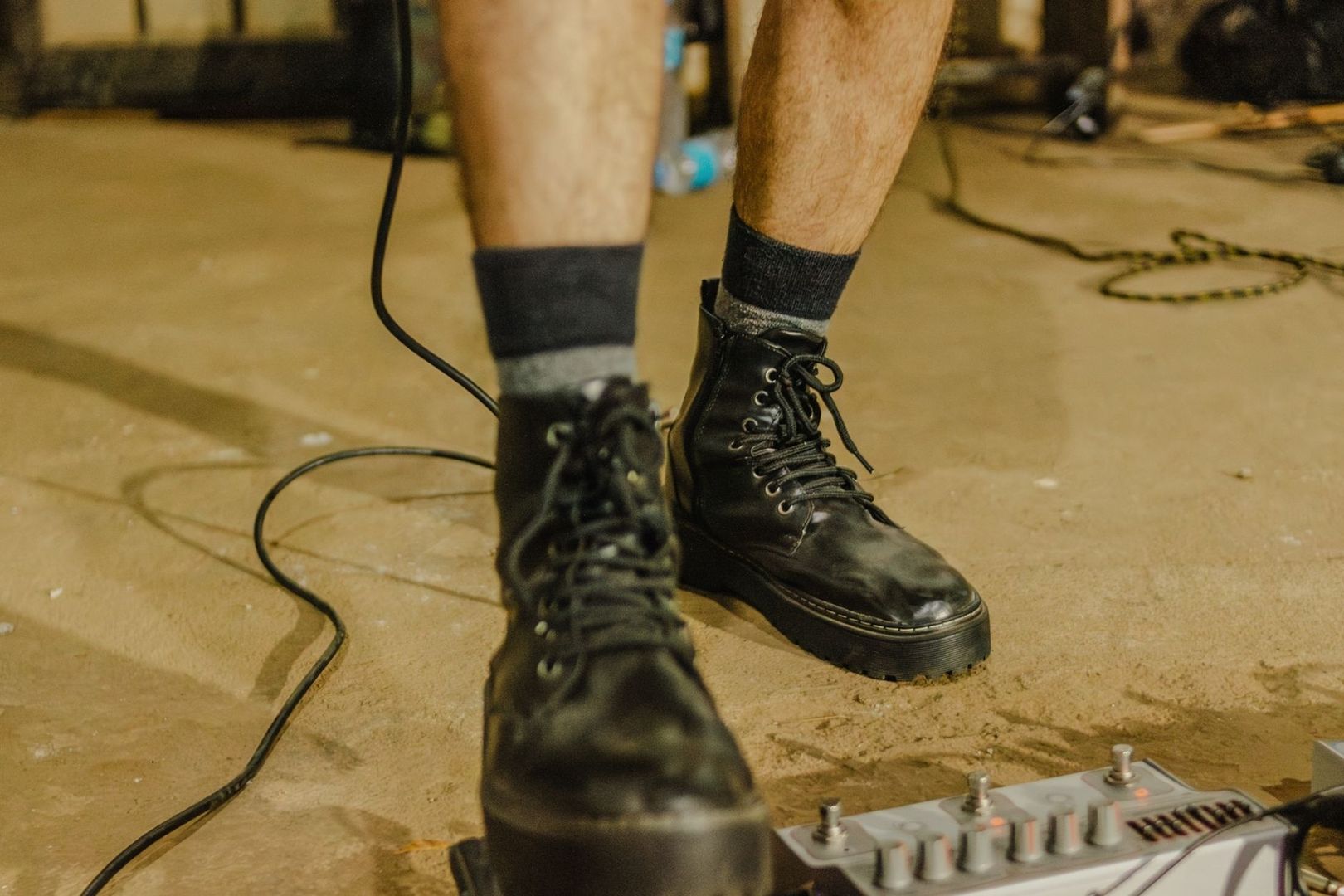
Footwear also affects how confidently a guitarist operates a pedalboard. Switching an overdrive, delay, tremolo, or tuner requires more than simply pressing down. You need to locate each control without looking constantly, apply enough force to engage it, and return to a neutral stance without disturbing the guitar. When fine-tuning your live rig ergonomics, selecting proper footwear ensures dependable pedal control during intricate solos. The traditional image of pointed boots or polished shoes can remain part of the presentation, but visual appeal should not override fit, traction, and physical support.
The Biomechanics of Pedalboard Accuracy Under Club Lights
Pedalboard accuracy begins with the sole. A sole that is too soft can absorb some of the information your foot needs to identify a switch, while an excessively rigid sole can make delicate control feel blunt. The ideal choice provides a clear, predictable response. It should allow the foot to feel the edge of a pedal and the change in resistance beneath the toe, without collapsing or twisting when pressure is applied.
This principle is similar to the relationship between flat bicycle pedals and suitable riding shoes. The pedal itself cannot provide reliable control if the shoe flexes unpredictably or loses contact. A stage shoe does not need a specialized cycling construction, but it does benefit from a reasonably stable platform, a controlled amount of flex, and a sole that does not slide across the pedal surface. A very thick platform can also create problems. Bulky boots may bridge two adjacent switches, especially when pedals are tightly packed, increasing the risk of engaging a compressor and overdrive together or muting a signal at the wrong moment.
Continuous pedals require a different kind of stability. A wah or volume pedal is operated through a controlled rocking movement, not a single downward stomp. The heel must remain planted or nearly planted while the ankle moves through a repeatable range. Excessive tread can catch on the pedal hinge, while a slippery sole can cause the foot to drift during a sustained sweep. It is vital to evaluate the complete pedalboard, not just individual switches.
- Moderate sole thickness: Enough protection for hard floors, but not so much that pedal position becomes difficult to feel.
- Controlled flexibility: The forefoot should bend naturally while the midsole remains stable during repeated stomps.
- Predictable traction: Grip should prevent sliding without making pivots and wah movements awkward.
- Compact shape: A moderate toe width helps avoid accidental contact with neighboring switches.
- Secure fit: Heel movement and loose laces can undermine precision during quick changes.
Comparing Common Stage Shoe Profiles for Working Bluesmen
Three profiles appear frequently on blues stages: leather dress oxfords, flat skate sneakers, and western boots. Each offers a recognizable silhouette, but each also changes the mechanical relationship between your foot and the board. Leather oxfords can complement a suit, pressed trousers, or an understated roots outfit. Their relatively narrow shape may be useful around compact pedalboards, although hard leather soles can be less forgiving on concrete or wooden floors.
Flat skate sneakers generally provide a broad, stable base and dependable rubber traction. They often suit players who need repeated pedal access and a relaxed club aesthetic. Western boots deliver strong visual character and can work exceptionally well when the shaft fits securely and the heel is moderate. However, a raised heel changes ankle posture and may make continuous pedals feel different from the way they feel in flat shoes. Dance footwear research also emphasizes the importance of balancing flexibility, traction, cushioning, and durability for performers moving repeatedly on stage, as described in these musical theater dance shoes.
| Shoe profile | Sole and pedal feel | Grip and movement | Fatigue considerations |
|---|---|---|---|
| Leather dress oxford | Firm, precise, sometimes less tactile | Moderate grip, limited lateral flex | Can become tiring without cushioning or a supportive insole |
| Flat skate sneaker | Stable and close to the board | Strong rubber grip and easy pivots | Usually comfortable, but may lack structured arch support |
| Western boot | Stable through the shank, altered by heel height | Good forward stability, variable pivot control | Supportive when properly fitted, tiring when narrow or rigid |
There is no single correct stage shoe. The right decision depends on board layout, floor material, set length, and the player”s foot shape. A polished oxford may be suitable for a short seated performance but less effective for four hours of standing. Conversely, a sneaker may offer outstanding control while looking too casual for a formal theater or an event with a specific dress code. The strongest choice combines an appropriate silhouette with an honest assessment of physical demands.
Practical Adjustments for Preserving Posture and Endurance
Small adjustments can make a familiar pair of boots considerably more useful. Supportive insoles are often the simplest starting point, particularly when vintage boots have a firm leather footbed but little cushioning. Choose an insole that fits without compressing the toes or lifting the heel excessively. A thick insert can reduce interior volume, change ankle alignment, and make the boot feel unstable. Trim the insole carefully and test it during rehearsal before relying on it for a full engagement.
Guitar strap height also affects foot placement. If the instrument hangs too low, the shoulders may round forward and the torso may lean while the player searches for pedals. If it hangs too high, the picking arm and fretting hand can feel restricted. The objective is a neutral position in which the guitar remains comfortable while both feet can reach the board without twisting the pelvis. Adjustable systems such as quick-adjust guitar straps can help during rehearsals and live changes, but any strap should be calibrated in the same footwear used on stage.
Here is a simple guide for testing the complete arrangement before a show.
- Wear the actual stage shoes: Do not test pedal spacing in socks or casual footwear if the performance pair has a different sole width or heel.
- Mark the neutral stance: Identify where both feet rest when playing without switching. This becomes the reference position for all pedal movements.
- Test every essential switch: Engage tuning, drive, modulation, delay, and mute functions repeatedly. Notice whether the toe reaches the center of each switch without brushing its neighbors.
- Practice wah and volume sweeps: Move through the full range slowly, then repeat at performance tempo. Watch for heel slip, sole catching, or loss of balance.
- Rehearse the longest set: Stand and play for at least the duration of the most demanding set. Fatigue often reveals pressure points that are not obvious during a short soundcheck.
- Inspect the stage floor: Dust, spilled drinks, cable ramps, and polished surfaces can change traction. Keep a backup pair with a similar fit if the venue environment is unpredictable.
Common pitfalls include wearing brand-new boots on opening night, choosing a shoe with a decorative pointed toe that limits the toes, and assuming visible tread automatically means safe traction. Break in performance footwear gradually. Check that the heel does not lift with each step, and make sure laces, straps, or zippers cannot catch on pedal edges. Smart watches, clip-on tuners, and metronome tools can support set management, but they should remain secondary to a stable physical setup. A vibrating alert or bright display is not useful if the player is compensating for painful footwear.
Command the Stage Without Sacrificing Your Feet
The most effective stage footwear balances vintage blues charm with modern practical support. Leather oxfords can deliver an understated, professional look. Western boots can strengthen a roots aesthetic. Flat sneakers can provide dependable traction and efficient pedal access in demanding club settings. The important point is to assess sole sensitivity, width, heel height, grip, arch support, and fatigue resistance together rather than selecting a shoe on appearance alone.
Before the next multi-set performance, audit the shoes as carefully as the amplifier and pedalboard. Test every switch, confirm that the board spacing matches the shoe width, calibrate strap height, and rehearse long enough to expose discomfort. A shoe that remains stable through the final chorus protects posture, reduces unnecessary movement, and supports more confident tone changes. Long-term stage performance is built from the floor up, and practical footwear is one of the simplest ways to preserve both physical endurance and musical control.