How to Build a Silent Rehearsal Rig for Tight Blues Ensembles
Why Loud Rehearsals Mask Crucial Rhythm Flaws
A silent rehearsal rig helps a blues ensemble attain something that a loud garage rehearsal often hides: accurate awareness of note placement. When guitar amplifiers, bass cabinets, cymbals, and reflective walls combine at high volume, a slightly late shuffle accent can disappear into the room. A bass note that drags behind the kick may feel acceptable because the overall sound is powerful. A guitarist may also mistake volume and sustain for a convincing 12/8 feel. Direct monitoring removes much of that acoustic mask and makes the pocket easier to examine.
Traditional rehearsal volume creates another problem. The ears become fatigued, concentration declines, and musicians may play harder simply to remain audible. That pattern can make a long set deteriorate rather than improve. Prolonged exposure to unmanaged sound levels can cause irreversible hearing damage, as explained in OSHA”s workplace noise guidance. A direct-input system, used with sensible headphone levels, lets the band practice dynamics, transitions, and solos without forcing every player to compete with the room.
The Core Silent Signal Chain for Rhythm Sections
The foundation is a small mixer or audio interface that receives each instrument as an isolated signal. Instead of placing high-wattage tube combos in the rehearsal room, the guitar can run through an amp-and-cabinet emulation pedal or a dedicated direct box. The guitarist should choose a sound with enough midrange definition to reveal pick attack and chord separation. Excessive gain makes timing harder to evaluate because sustained distortion blurs the beginning and end of each stroke.
Bass requires particular care. A bass guitar can feed a dedicated preamp or amp-simulation pedal before reaching the mixer. The signal should retain a clear fundamental without overwhelming the headphone buses. A modest high-pass filter on unrelated channels, careful low-mid control, and a properly set input gain will help the bassist hear the kick pattern and the guitarist”s rhythmic subdivisions. Electronic drums with mesh heads or electronic trigger pads provide a practical silent alternative to acoustic drums. The drummer still needs responsive velocity behavior, a natural ride sound, and enough dynamic range to distinguish a quiet ghost note from a backbeat.
Professional in-ear monitor systems are frequently used because they provide consistent personal mixes without depending on room acoustics. A rehearsal rig does not need touring-level complexity, but the same principle applies. Every player should receive a stable mix, and no one should need to turn up an instrument merely because it is physically distant in the room.
| Traditional rehearsal gear | Silent rehearsal equivalent |
|---|---|
| High-wattage guitar combo | Guitar preamp with cabinet emulation |
| Large bass cabinet | Bass DI or preamp pedal into the mixer |
| Acoustic drum kit | Electronic kit with mesh heads or triggers |
| One shared room sound | Individual headphone mixes through aux sends |
| Microphones placed across the room | Direct inputs and close, controlled vocal microphones |
Selecting and Routing the Central Headphone Distribution Hub
The central hub can be an analog mixer with a multi-channel headphone amplifier, or a digital mixer with personal monitor control. An analog setup is often easier to understand. Each input is visible, and an auxiliary send can feed a headphone amplifier. This arrangement is suitable when the band wants reliable control with minimal software. A digital mixer costs more in time and setup, but it can store scenes, provide several independent mixes, and allow musicians to adjust their own balance from a phone or tablet.
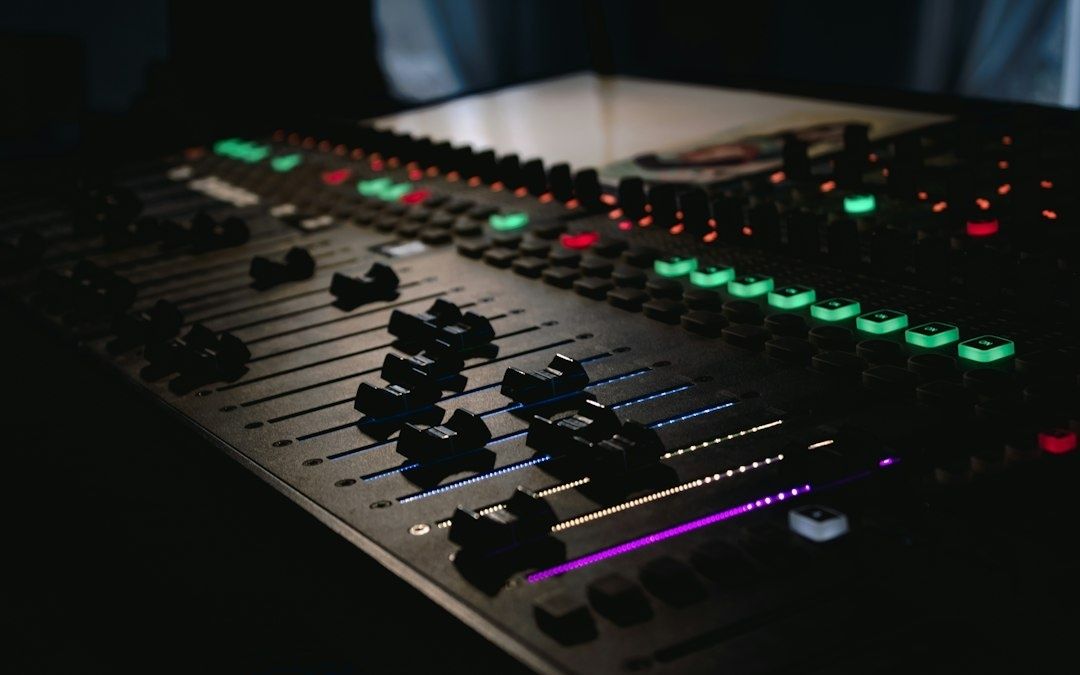
Discrete aux sends are important. The drummer may need more bass and click, while the singer needs more guitar and vocal reverb. The guitarist may want the snare and bass prominent but prefer a lower vocal level during an instrumental passage. The engineer or band leader should establish a useful starting mix before allowing individual adjustments. Gain staging must happen before monitor levels are raised: set each input so normal playing remains comfortably below digital clipping, then leave headroom for a forceful solo or accented chorus.
Safe monitoring is a continuing responsibility. NIOSH publications provide useful occupational noise recommendations; this Authoritative Source can help musicians treat headphone volume as a controlled parameter rather than a personal preference. The goal is not to create a loud miniature stage. The goal is to create enough clarity that every musician can play accurately at a moderate level.
- Use balanced cables for long connections and keep power cables separate where practical.
- Provide one reliable DI box for bass and a spare for acoustic or auxiliary instruments.
- Check whether passive pickups require a high-impedance input or an impedance converter.
- Label every headphone output and keep spare adapters available.
- Set a conservative master level before musicians put on headphones.
- Keep a short backup cable and a spare power supply for essential pedals.
Dialing in Tight Blues Grooves with Click Tracks and Backing Audio
A click track should clarify the pulse, not flatten the character of the blues. For a 12/8 slow blues, begin by deciding whether the click represents each dotted-quarter beat or a smaller subdivision. A dotted-quarter pulse can make a relaxed three-part feel obvious, while an eighth-note or triplet subdivision can expose uneven internal spacing. For a shuffle, the band can alternate between a broad quarter-note click and a more detailed subdivision during practice. The larger pulse tests stability; the smaller pulse tests control.
Drumless backing tracks are useful because they remove the drummer”s timing reference and expose the relationship between bass, guitar, and the implied groove. The Spotify collection Drumless Blues shuffle swing tracks includes blues, swing, shuffle, and related practice material, with examples ranging from slow tempos to faster swing and boogie feels. Such tracks should support focused exercises rather than replace active listening. The band can first play with a click, then mute it and compare whether the pocket remains stable.
- Choose the song”s basic meter and write down the intended pulse. For a 12/8 blues, decide whether the click marks dotted-quarter beats or a finer subdivision.
- Set the tempo at a level where the drummer, bassist, and guitarist can play quietly and evenly. Do not begin at performance volume.
- Record a short pass with the click, then examine the attack of the kick, bass, and guitar. Listen for repeated rushing before chord changes or dragging after fills.
- Build a tempo map with only modest changes. A natural blues ritardando should occur at a clear turnaround or ending, not as an accidental slowing throughout the chorus.
- Practice the transition with a count-in, then remove selected click beats. If the band loses the pulse when the click disappears, return to the previous step.
A tempo map should preserve musical breathing. Many blues performances relax slightly before a final vocal line or extend a turnaround, but an unplanned slowdown can make the groove feel heavy. Program these changes deliberately in the digital audio workstation, or use a MIDI click track when the default metronome cannot change subdivision cleanly between sections. The purpose is not mechanical perfection. It is dependable collective timing that leaves room for expressive phrasing.
Integrating Harmonica and Vocals Without Acoustic Bleed
Harmonica often needs a different input strategy from guitar and bass. A cupped bullet microphone can produce a high-impedance signal and may require a suitable preamp, impedance-matching device, or harmonica-specific pedal before entering the mixer. The chain should preserve the player”s control over cupping and distortion without adding excessive hiss. If the signal is sent through a balanced preamp, check the output level carefully and avoid stacking multiple gain stages without purpose.
Vocals require separation and comfort. A close dynamic microphone reduces the amount of headphone spill entering the vocal channel, while a quiet room reduces the sound of foot tapping, chair movement, and unamplified percussion. Electronic drums help, but the drummer”s physical motion can still create noise that reaches an open vocal microphone. A small amount of hall reverb can make headphones feel less sterile and help singers phrase naturally. Keep it subtle, and send the reverb only to the monitor mix unless the band is deliberately recording the rehearsal.
- Place the vocal microphone away from headphone ear cups and loud monitor outputs.
- Use a pop filter when close singing produces excessive plosives.
- Keep harmonica and vocal channels separate so their effects can be adjusted independently.
- Check phase and polarity if a microphone is combined with a direct signal.
- Provide a dry vocal option for musicians who need maximum timing clarity.
Take Your Rehearsal Discipline to the Live Stage
A direct monitoring system builds micro-timing awareness that transfers directly to a live set. The bassist hears whether a note lands with the kick or slightly after it. The guitarist notices whether a shuffle accent is even. The drummer can control ghost notes without relying on the room to soften them. These improvements make a band sound more energetic on stage because the ensemble no longer depends on volume to create cohesion.
Reduced fatigue also allows longer, sharper rehearsals. The group can spend one pass on arrangement, another on dynamics, and a final pass on transitions without entering the familiar cycle of louder playing and weaker concentration. Before the first full run, use this checklist:
- Connect every instrument directly and label all mixer channels.
- Set input gain with the loudest expected playing, leaving digital headroom.
- Create a balanced shared mix before building personal aux mixes.
- Test the click, backing track, count-in, and planned ritardando.
- Confirm that every musician can hear the essential pulse at a moderate level.
- Record one chorus, review the timing, and correct one issue at a time.
- Save the mixer scene and mark cable positions for repeatable setup.
Start with one song and one controlled headphone mix. Once the band can hear the groove clearly without acoustic masking, expand the system to the full set. The result should be quieter practice with stronger timing, more deliberate dynamics, and a rhythm section that arrives on stage prepared to make every blues phrase count.